
Environmental Governance and Policy
Air pollution
Caught in the Crossfire: Himalayan Glaciers at the Confluence of Air Pollution and Climate Change
24 September 2026
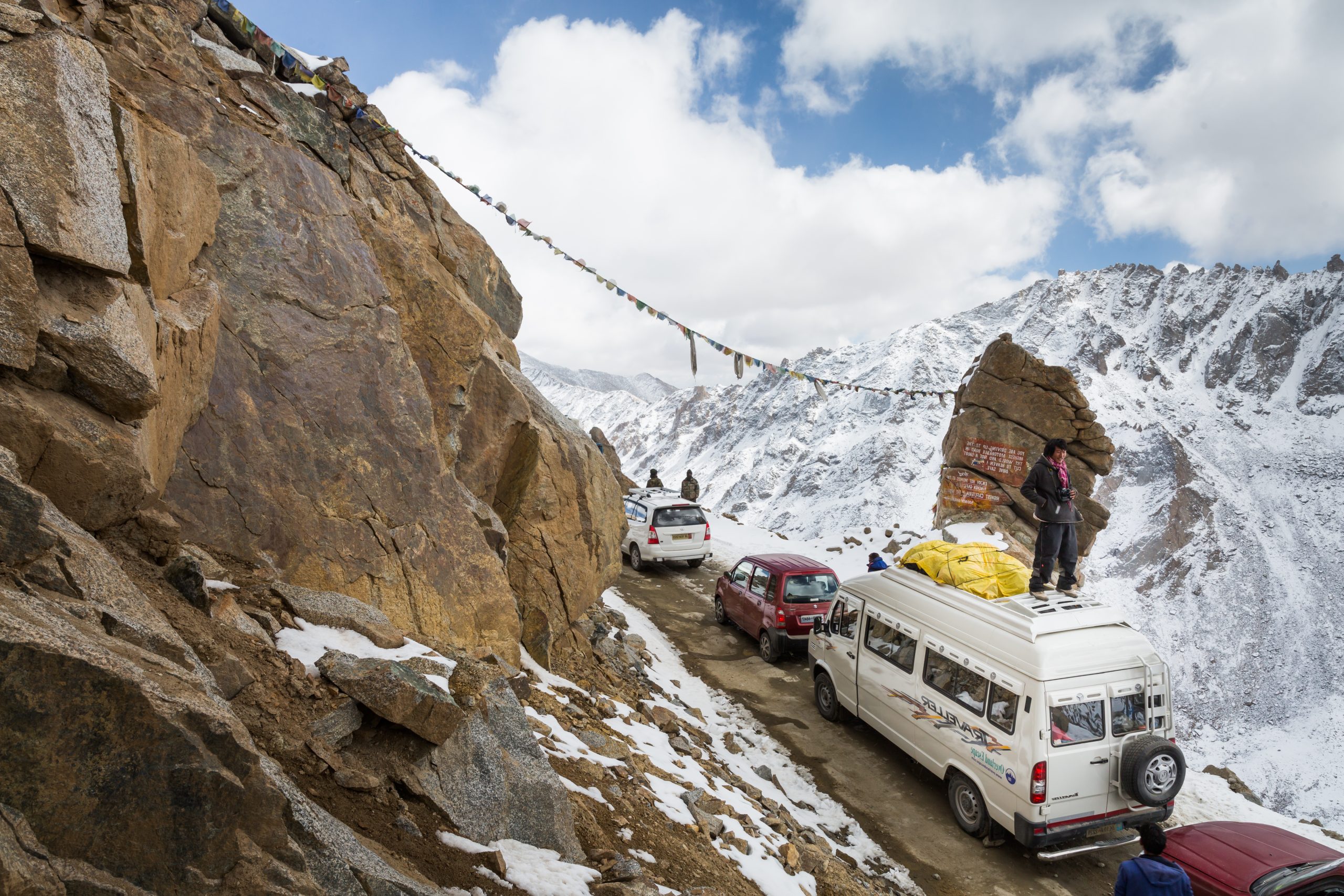
Traffic jam on the way to Khardung La pass. Image: Zoltan Szabo, iStock
Himalayan glaciers are melting faster than ever. Over the past three decades, glacier area in the Hindu Kush Himalayan region has reduced by 12%, with a 5% reduction between 2010 and 2020 alone. It is now widely understood that glaciers are melting faster than they can be formed due to increasing greenhouse gas emissions. However, climate change isn’t the only environmental threat to glaciers – emissions of heat-absorbing air pollutants such as black carbon are accelerating their melting. A 2021 study in the Drass Basin in the Indian Himalayas found that glaciers closer to a national highway were melting faster than those farther away, largely owing to pollution from vehicular traffic. In this context, air pollution is exacerbating the impacts of climate change.
How does air pollution contribute to the melting of glaciers?
Air pollutants are made up of solids, liquids or gases suspended in the air. Solid and liquid pollutants suspended in the air are known as aerosols, while gases are known as gaseous pollutants. These pollutants can play a key role in regulating the temperature in the atmosphere. Some pollutants reflect solar radiation away from Earth and cool the atmosphere, while others absorb the radiation, and heat the atmosphere. As a result, emissions of heat-absorbing aerosols such as black carbon can further increase temperatures in an atmosphere already being warmed by greenhouse gases. A byproduct of incomplete combustion, black carbon is often found in diesel vehicle exhaust, smoke from cookstoves, brick kilns and wood burning – all prevalent sources of pollution in the Himalayas.
Black carbon contributes to accelerated glacier melting through two channels: increased atmospheric warming and reduced albedo. The first occurs when black carbon in the air absorbs solar radiation and converts it into heat, thereby warming the surrounding air. The second occurs when the solid black carbon particles get deposited on glaciers and darken their surface. As a result, the albedo of the glacier, i.e. the ability of the surface to reflect sunlight away reduces, leading the glacier to absorb more solar energy and melt faster. This is evidenced by the fact that the Himalayas are already warming faster than the global average.
Risks posed by accelerated glacier melt
The consequences of accelerated glacier melt are manifold. In the short term, as the structural integrity of the glacier and the underlying mountain is compromised, the risk of disasters such as landslides increases, as seen in the recent Nepal flood calamity. Similarly, the risk of Glacial Lake Outburst Floods (GLOFs) also rises as glacial meltwater accumulates in lakes, posing a major threat to downstream communities. Given the dynamic nature of glacial lakes, the National Disaster Management Authority has been working with the government to set up monitoring and GLOF Early Warning Systems.
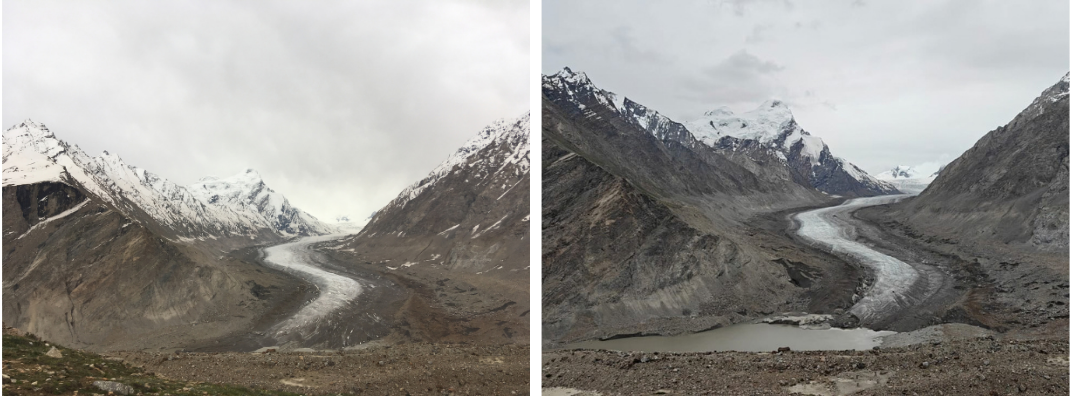
As these freshwater stores deplete faster than they can be replenished, increased glacier melt has water-supply implications for millions. In the short run, faster melting will mean more water flowing into rivers — but this is a sign of reserves being drawn down, not a lasting gain. Once glaciers shrink past a critical point, meltwater contribution permanently declines, leaving downstream communities with less water than before.
Water supply will also be affected by changing monsoon patterns, partly due to rising concentrations of black carbon in the atmosphere. This has far-reaching impacts on agriculture, tourism and hydropower generation, all critical economic activities for both mountainous regions and the plains. This places a unique responsibility on mountain states to make development decisions that safeguard these glaciers to protect those downstream, whose lives and livelihoods depend on the rivers originating from these states. Himachal Pradesh has taken on this role of ‘guardian of natural resources’ in its 2025 climate-sensitive human development report.
How can we protect our glaciers from pollutants such as black carbon?
The good news is that black carbon is a short-lived pollutant, meaning that unlike greenhouse gases, it doesn’t stay in the atmosphere for long durations. If we start taking action to control its emissions, we will see quick results.
Existing solutions to curb black carbon emissions, such as adoption of cleaner cooking fuels such as LPG and renewably generated electric cooking or transitioning towards low-emission brick kilns, have the technical potential to achieve an 80% reduction in black carbon levels by 2030, relative to 2010. Because this heat-absorbing aerosol has far-reaching warming impacts in the Himalayas, even small reductions in its concentration can yield enormous benefits for the region. Tackling this pollutant offers a unique opportunity not only to reduce air pollution concentrations but also to improve public health and align with climate goals in the short run by reducing regional warming and disruptions to monsoon patterns. Moreover, South Asia already has policies in place to curb black carbon emissions, such as electrification of transport or promoting household access to LPG for cooking, which, if fully implemented, could reduce emissions by 23%.
Looking ahead, effective policy action to curb black carbon emissions and protect Himalayan glaciers should be based on three key themes:
1. Starting from the sub-national level, Himalayan states must recognise the adverse impact of polluting activities conducted near glaciers. Unbridled development in ecologically sensitive areas, while profitable in the short run, can prove to be highly detrimental in the long run by contributing to glacier deterioration. Development decisions that promote growth while safeguarding fragile ecosystems can be a far wiser economic choice for these developing states. Himachal Pradesh’s recent efforts to move toward electric mobility in both urban and rural areas reflect this kind of thinking.
2. At the regional level, increased cooperation between Himalayan states can foster the efficacy of air pollution management actions. Studies of black carbon deposits on Himalayan glaciers have identified sources ranging from diesel vehicles on highways near the glaciers to brick kilns far away in the plains. Fumes from the kilns rise through convection currents and the constituent solid pollutants get deposited on the ice. Sandwiched between the two largest black-carbon-emitting countries, India and China, Himalayan glaciers face an imminent threat from polluting sources both near and afar. Actions to control air pollution in one region within an airshed will have limited impact if the region remains exposed to pollutants from neighbouring areas within the airshed. Coordinated monitoring and tracking of transboundary air pollution and its impacts, such as those outlined in the 1998 Malé Declaration for control of air pollution in South Asia, should be considered.
3. At the global level, low- and middle-income countries (LMICs) such as those surrounding the Himalayas must prioritise air pollution action. The co-benefits that accrue from these actions will also have far-reaching knock-on effects for health and climate change mitigation. For example, a recent study argues that the ideal strategy for sharing the burden of climate mitigation responsibility should entail LMICs prioritising air pollution mitigation strategies, while high-income countries (HICs) bear most of the climate mitigation cost. This approach would enable just climate action while maximising health gains from avoided pollution.
Himalayan glaciers find themselves at the confluence of two major environmental threats – air pollution and climate change, both fuelled by harmful emissions. Despite their overlaps, the narrative around air pollution and climate change mitigation has recently taken a dangerous turn. Evidence is emerging that air pollution management actions, such as reducing sulphur in shipping fuel, have led to increased atmospheric warming. In the face of a warming planet, this narrative presents air pollution reduction and climate impacts as being at odds with each other. This framing is misleading and counterproductive.
Air pollution and climate change interact in complex ways across different environments. Still, the main message is always the same: reducing emissions will address both the air pollution and climate change crises. The nuance lies in the kinds of emissions we must reduce to maximise gains. Ultimately, it is a matter of recognising that development decisions play out in many forms on the ground – be it air pollution or climate change. We can use this confluence strategically to secure our natural resources, livelihoods and, effectively, our future.
(The author would like to thank Bhargav Krishna, Kartikeya Jain, Upamanyu Das, and Sonali Verma for their feedback and suggestions.)